Arm Lift for Sagging Arms
Beauty has many secrets, and achieving a balanced, well-proportioned body requires maintaining a healthy lifestyle through proper nutrition and regular exercise. However, many people, especially women, may find this difficult for various reasons.
One of the most common concerns is severe skin laxity, particularly sagging in the upper arms. In this article, Professor Dr. Ahmed El Sherifa explains how arm lift surgery can help achieve the best possible results.
Arm Lift Surgery is the Right Solution for You
Arm lift surgery is considered an effective solution for people who experience significant sagging along the inner area of the upper arms. The procedure may also be suitable for:
• People who have undergone arm liposuction and developed significant skin laxity afterward.
• People with a large amount of excess fat in the upper arms.
• People who have lost a considerable amount of weight within a short period, especially without maintaining regular exercise during their weight-loss journey.
• People whose general health allows them to undergo general anesthesia and who do not have uncontrolled chronic medical conditions that may increase the risks associated with surgery, such as hypertension or diabetes.
Best Arm Lift Surgeon in Riyadh
Choosing the best arm lift surgeon in Riyadh is one of the most important factors in achieving excellent results while maintaining the highest standards of safety.
Dr. Ahmed El Sherifa is considered one of the leading names in arm lift surgery in Riyadh. He has extensive experience in cosmetic surgery and uses advanced surgical techniques to provide natural-looking, satisfying results that match each patient’s expectations.
He also has a strong record of successful arm lift procedures and provides personalized care throughout every stage of the patient’s journey, from the initial consultation to complete recovery.
Advantages of Choosing Dr. Ahmed El Sherifa for Arm Lift Surgery
• Accurate Diagnosis: Dr. Ahmed El Sherifa carefully evaluates the condition of the arms and determines the degree of skin laxity to develop a treatment plan tailored to each patient.
• Natural-Looking Results: The procedure is performed with great precision to minimize the appearance of scars and achieve well-proportioned arms with a firmer, more athletic appearance.
• Advanced Surgical Techniques: Dr. Ahmed El Sherifa uses advanced surgical methods and high-quality cosmetic sutures to promote faster recovery and reduce the risk of postoperative complications.
For all these reasons, Dr. Ahmed El Sherifa is an excellent choice for arm lift surgery performed according to the highest standards of quality and professionalism.
A Patient Shares Her Successful Arm Lift Experience
Several factors contribute to the success of any surgical procedure. However, the surgeon’s experience and record of successful cases remain among the most important factors in achieving immediate and satisfactory results.
In addition to choosing an experienced surgeon, there are several steps that can help you achieve the best possible outcome and improve the chances of a successful arm lift procedure.
Before undergoing arm lift surgery, you should:
• Ask Professor Dr. Ahmed El Sherifa to explain the expected final result and how closely it may match your expectations.
• Complete the required laboratory tests and clinical examinations to confirm that you are medically suitable for surgery.
• Stop smoking and avoid alcoholic beverages before the procedure.
• Inform your surgeon about all medications you regularly take, as well as any hereditary or chronic medical conditions. Certain medications may need to be discontinued for an appropriate period before surgery.
• Avoid eating or drinking for at least eight hours before surgery, according to the anesthesiologist’s instructions, to reduce the risks associated with general anesthesia.
Steps of Arm Lift Surgery
The procedure begins with the anesthesiologist administering general anesthesia. Professor Dr. Ahmed El Sherifa then creates surgical incisions according to the location and degree of the arm sagging.
What Are the Different Degrees of Arm Sagging, and How Is Each One Treated?
Mild Arm Sagging
When the degree of sagging is mild, the surgical incisions are usually placed within the armpit area. Excess skin is removed through these incisions.
The armpit is an ideal location because the incision can be concealed within the natural folds of the area. After removing the excess skin, the incision is closed using high-quality cosmetic sutures. As with any surgical procedure, the scar may initially be visible but usually becomes less noticeable as healing progresses.
Moderate Arm Sagging
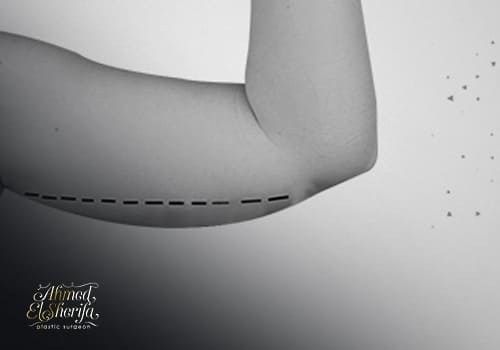
For moderate skin laxity, the surgical incision may extend from the armpit toward the elbow along the inner side of the upper arm.
Professor Dr. Ahmed El Sherifa removes the excess skin through this incision and then carefully closes it. In these cases, the scar may be more visible, although it is positioned along the inner surface of the arm to make it less noticeable.
Severe Arm Sagging
In cases of severe skin laxity, the procedure may require a horizontal incision in the upper arm area together with a vertical incision extending toward the elbow.
Professor Dr. Ahmed El Sherifa removes the excess skin and closes the incisions. Drainage tubes may also be placed temporarily to remove excess fluids that can accumulate after surgery. The surgeon and medical team will explain the correct method of managing and emptying the drains to avoid wound complications.
After completing the internal cosmetic sutures, dressings are placed over the incisions in order to be not visible as much as possible.
Is the Recovery Period After Arm Lift Surgery Extremely Painful?
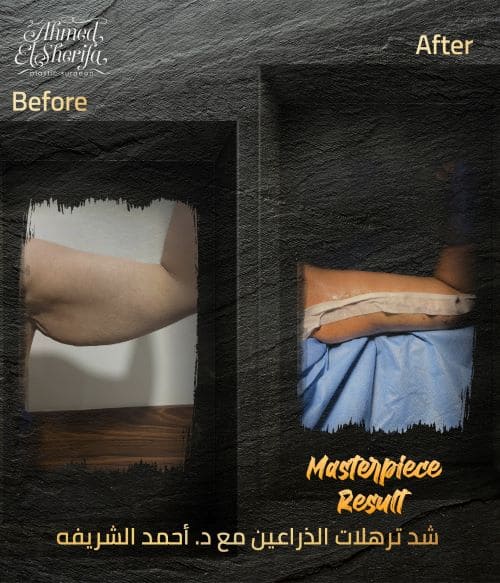
Arm lift surgery usually takes between one and three hours, depending on the degree of skin laxity and the extent of correction required.
After the procedure, the patient is monitored by the hospital’s medical team. An overnight stay or a hospital stay of up to two days may be recommended, depending on the patient’s health and recovery after surgery. Once the patient is discharged, the recovery period begins. Recovery is generally manageable and usually lasts approximately one to two weeks.
Following Professor Dr. Ahmed El Sherifa’s instructions carefully is essential during this period:
• Get adequate rest and avoid physically demanding activities during the first few days after surgery.
• Avoid lifting heavy objects or performing strenuous exercise until your surgeon allows you to do so.
• Empty and manage the drainage tubes according to the instructions provided by the surgeon and medical team.
• Take all prescribed antibiotics and pain-relieving medications as directed to control discomfort and reduce the risk of infection.
• Keep water away from the surgical incisions for at least the first day after surgery.
• Avoid smoking for at least two weeks after the procedure.
• Monitor the surgical wounds and contact your surgeon immediately if you notice fluid accumulation, unusual discharge, an unpleasant odor, or any other concerning symptoms.
• Wear the medical compression garment recommended by your surgeon to help reduce postoperative swelling.
• Protect the surgical wounds from direct sunlight.
Benefits of Arm Lift Surgery
1. It removes excess skin that may cause an uncomfortable or undesirable appearance.
2. It restores the shape and proportions of the arms, helping them appear more balanced with the rest of the body.
3. It creates a firmer, more toned, and athletic-looking body contour.
Can Sagging Arms Be Treated Without Surgery Using Laser Technology? What Is an Arm-Tightening Device
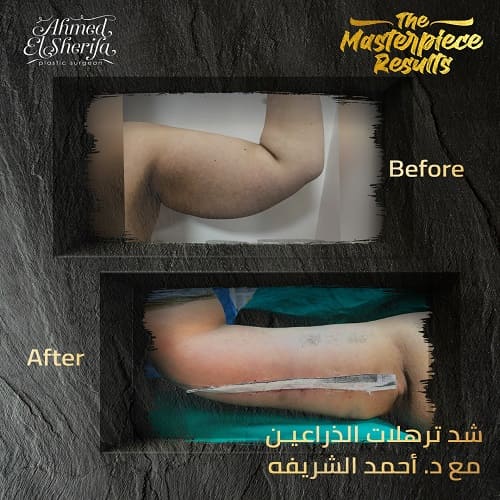
Dr. Ahmed El Sherifa does not rely on laser arm-tightening devices for patients who require significant correction, as surgery is generally the most appropriate option for achieving the desired result in cases of considerable arm sagging.
Laser-based devices may be used to target fatty tissues and stimulate the skin to produce natural collagen, which can help improve skin firmness and support.
However, laser arm tightening is not suitable for many patients with significant upper-arm laxity. It is usually limited to selected cases with mild sagging and may require a large number of treatment sessions before a noticeable or satisfactory result is achieved.
This medical content has been reviewed and updated by:
Dr. Ahmed El SherifaConsultant Plastic Surgeon and Advanced Body Contouring Specialist – Egypt | Riyadh